
The Keith & Dufftown Railway reopened as a diesel heritage railway in 2001. Today visitors may enjoy a trip on this very scenic railway linking Keith with Dufftown, 11 miles to the south.
It is ideal for exploring an area filled with traditional malt whisky distilleries, paths and wildlife. The journey is one of ever changing colours and rivers flowing through farmland and woodlands.
Trains presently depart from Keith Town station which is a short walk from the mainline Keith station. As this is an independent line, national tickets, railcards and rail passes are not valid on these services.
SAVING! The Spirit of Scotland Travel Pass and the Highland Rover Travel Pass (for rail travel) will entitle you to a 10% discount on standard fares.
Passengers have either just over an hour or just over three hours in Dufftown before the return journey to Keith.
If you wish to spend longer in Dufftown, or for days when the railway is not in operation, an alternative bus service is available from Keith (Moray Council service 368 (Monday to Friday) or Elgin (Stagecoach service 36).
For travel to Keith see our guides to the Inverness to Aberdeen Line and Getting to the Highlands. For other places to visit in Keith, accommodation and places to eat see our Guide to Keith.
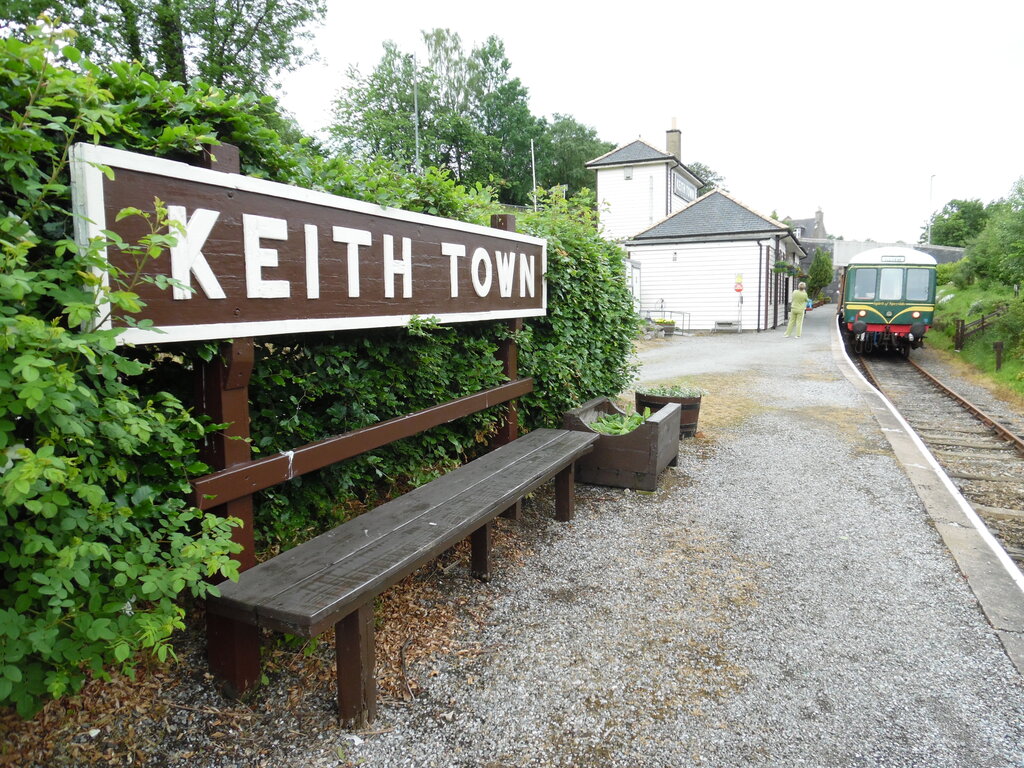
Keith Town Station, Keith and Dufftown Railway
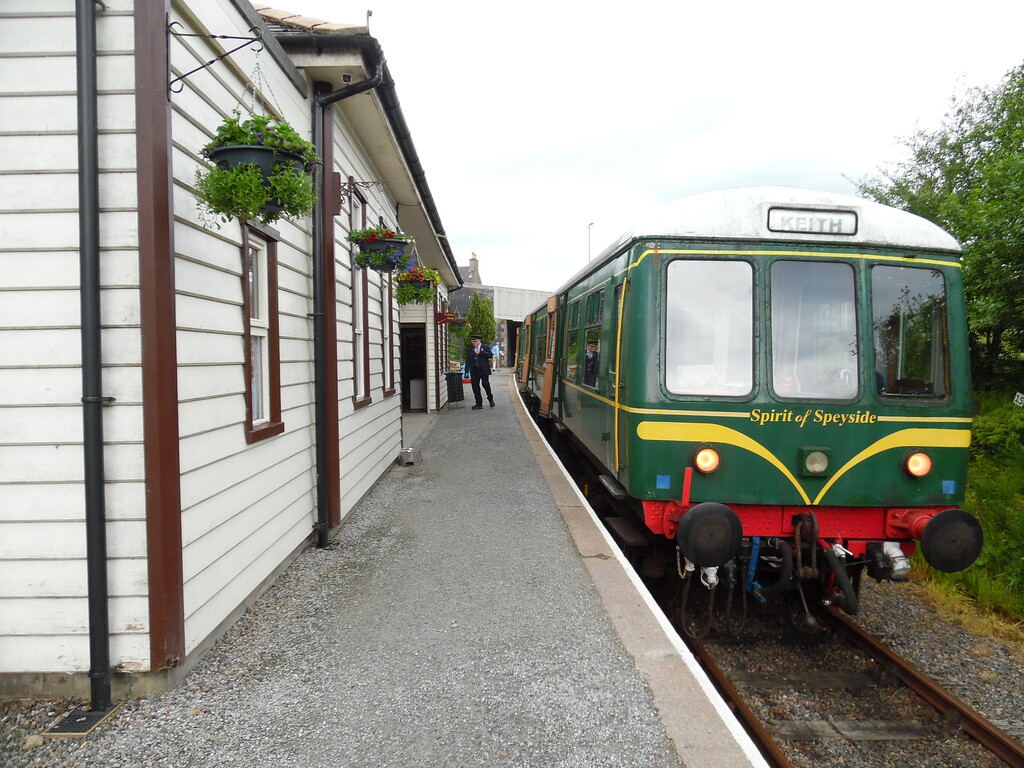
Spirit of Speyside train at Keith Town station
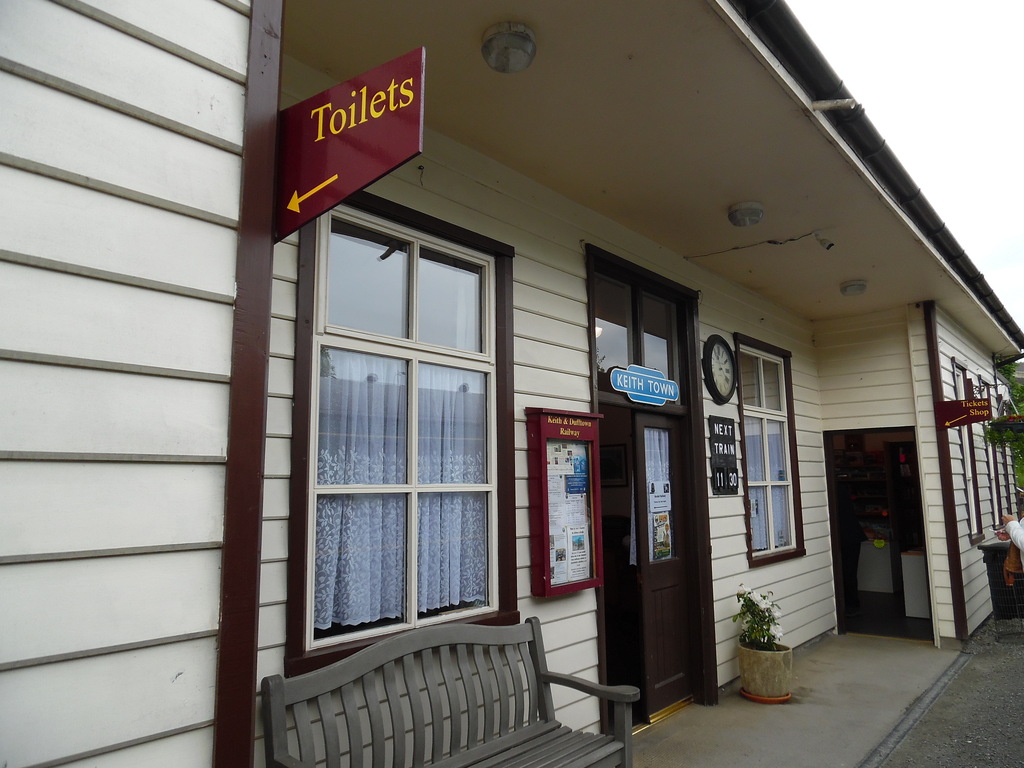
Keith Town Station building
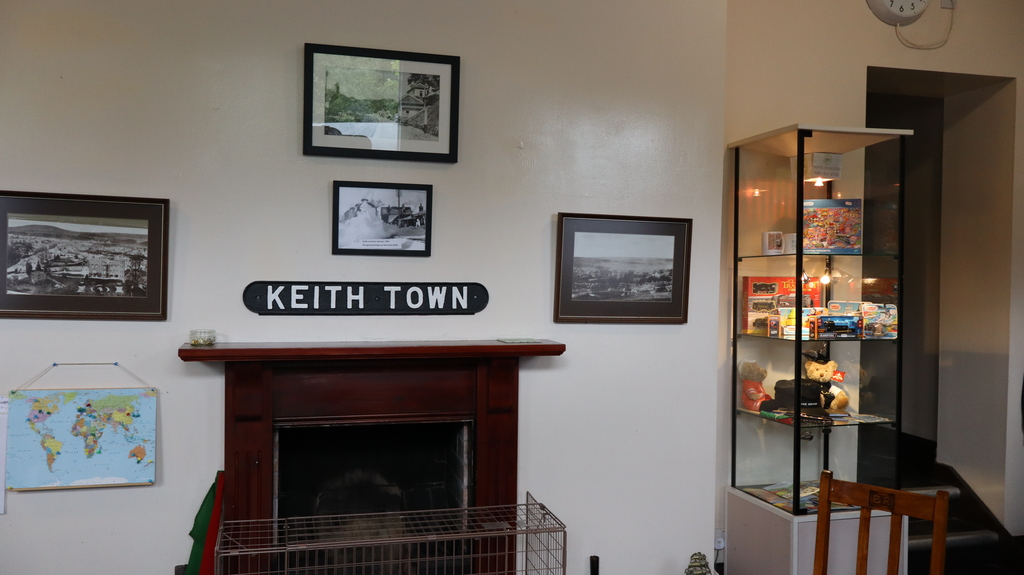
Waiting room at Keith Town Station
Keith
Keith Town station is in the heart of the town and close to attractions. The present station was opened in 2003.
The split level station keeps out the noise of modern life and is a perfect replica of the original Great North of Scotland Railway station which once stood on the site. There is a small shop.
Having got on board, the train departs Keith for the journey down the valley.
Drummuir
The first stop is at the small halt of Drummuir.
The platform is sheltered from the village in a small wooded valley and passengers getting off here can enjoy the woodland and birdlife that lives here.
Also in this peaceful setting is a walk through the estate of Drummuir Castle. The Castle is not open to the public but you get good views from the walk.
The Castle was built in 1847 by Thomas Mackenzie for Admiral Archibald Duff, whose distinguished career included service with Lord Nelson.
The Castle is a splendid example of the Scottish Victorian architectural style. The 60 feet high central lantern tower, notable for its Gothic tracery dominates the interesting roofline, with its battlements, turrets and chimneystacks.
The line continues to Dufftown, an attractive small town surrounded by hills. Dufftown Station has a small shop and the Sidings Cafe which is housed in two former railway carriages.
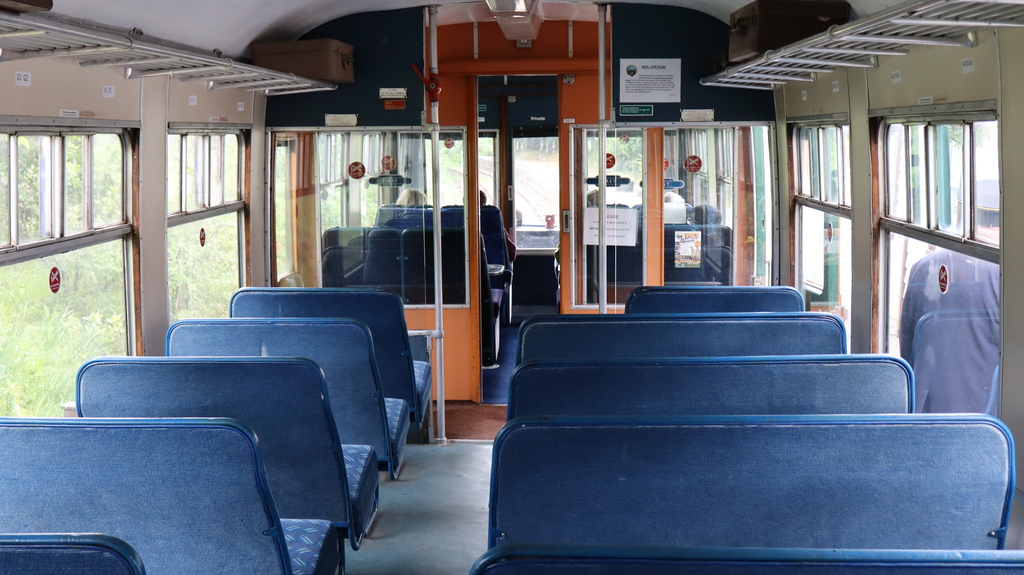
Carriage interior
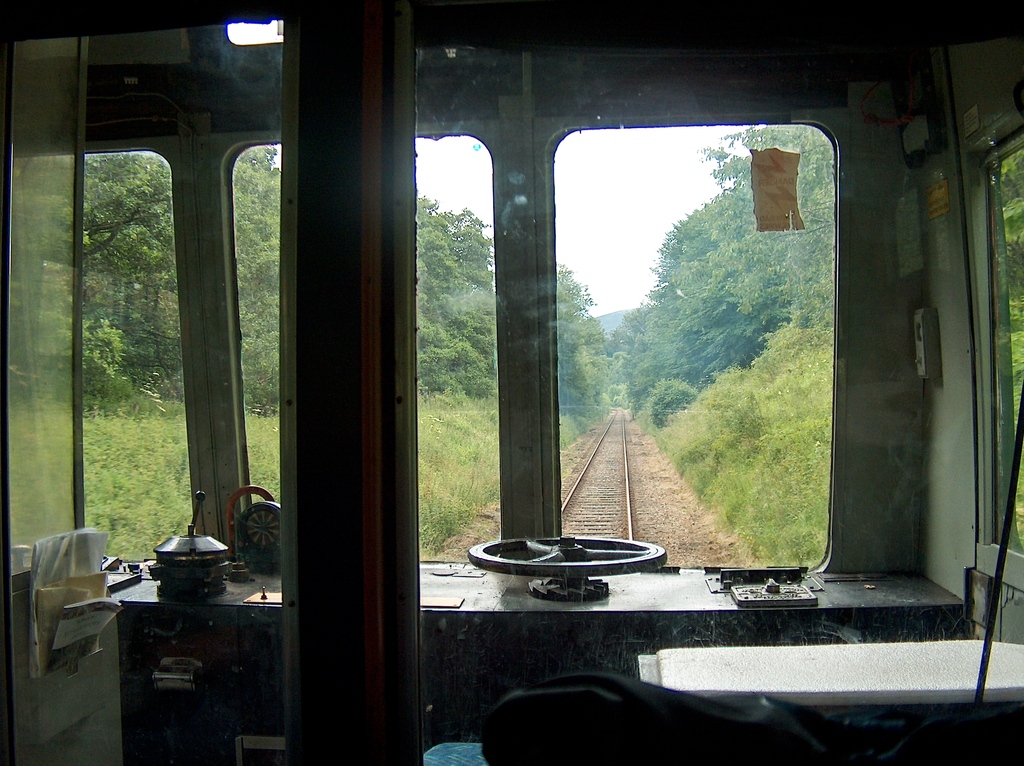
The carriages provide panoramic views of the line
Dufftown is known as the malt whisky capital of the world – being the largest exporter of whisky from Britain. The town not only has two excellent distilleries to explore but also has its own castle.
The town is a small market town in the heart of Speyside which takes its name from its founder James Duff, the fourth Earl of Fife.
Look out for the Clock Tower standing in the centre of Dufftown which was completed in 1839. It was originally built as the town jail and later used as the burgh chambers.
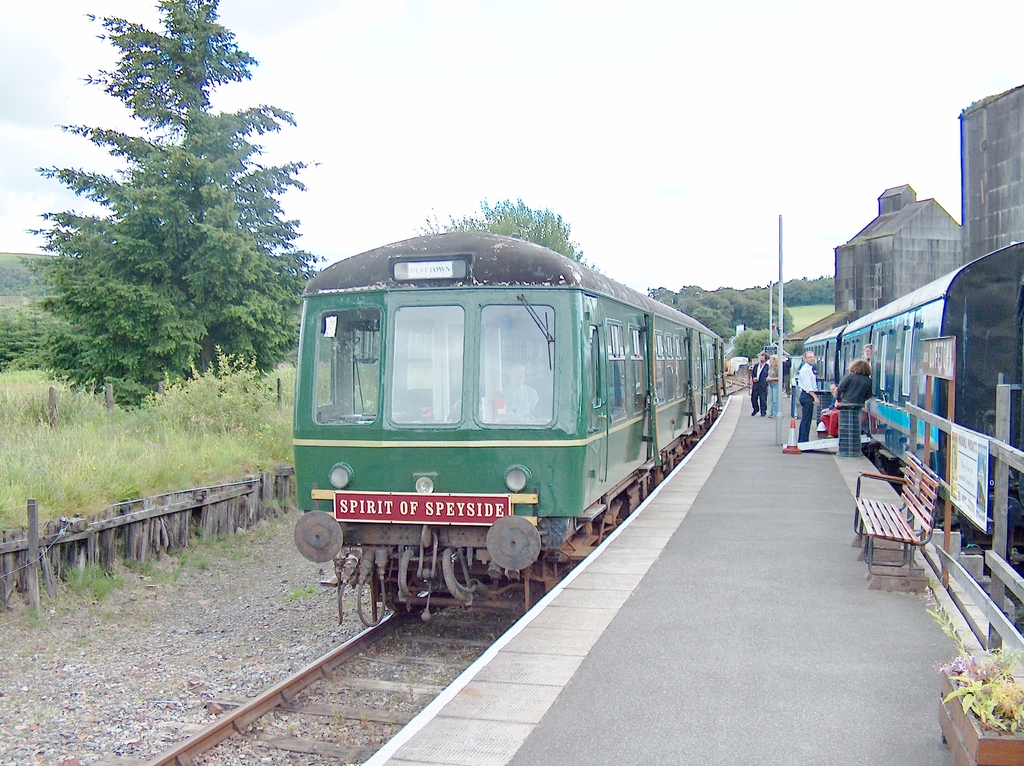
Dufftown Station
Founded in 1886, this family owned distillery makes single malt whisky including 12 year old, 14 year old, 15 year old and 18 year old. It is the world's most awarded single malt scotch whisky.
Water is from the Robbie Dhu Spring and there is an onsite cooperage. Various tours and tastings are available. They also run an artists in residence scheme.
Founded in 1893, they produce single malt whisky including 12 year old, 14 year old, 16 year old and 21 year old.
They still keep every craft in-house including malting their own barley and hand-coopering casks. The Dunnage warehouse is built from the stones of Balvenie Castle.
While in Dufftown you may wish to visit Balvenie Castle, now cared for by Historic Environment Scotland and is set in the attractive hills surrounding Dufftown.
King Edward I of England was an early visitor to the Castle. Of particular interest today is the curtain wall – a rare example of 13th century military architecture in Scotland.
Also of note is the Atholl Lodging – a fine example of Renaissance architecture, showing the layout of a noble residence and containing an iron yett – the two-part iron cross-barred gate behind the main entrance which is unique in Scotland.
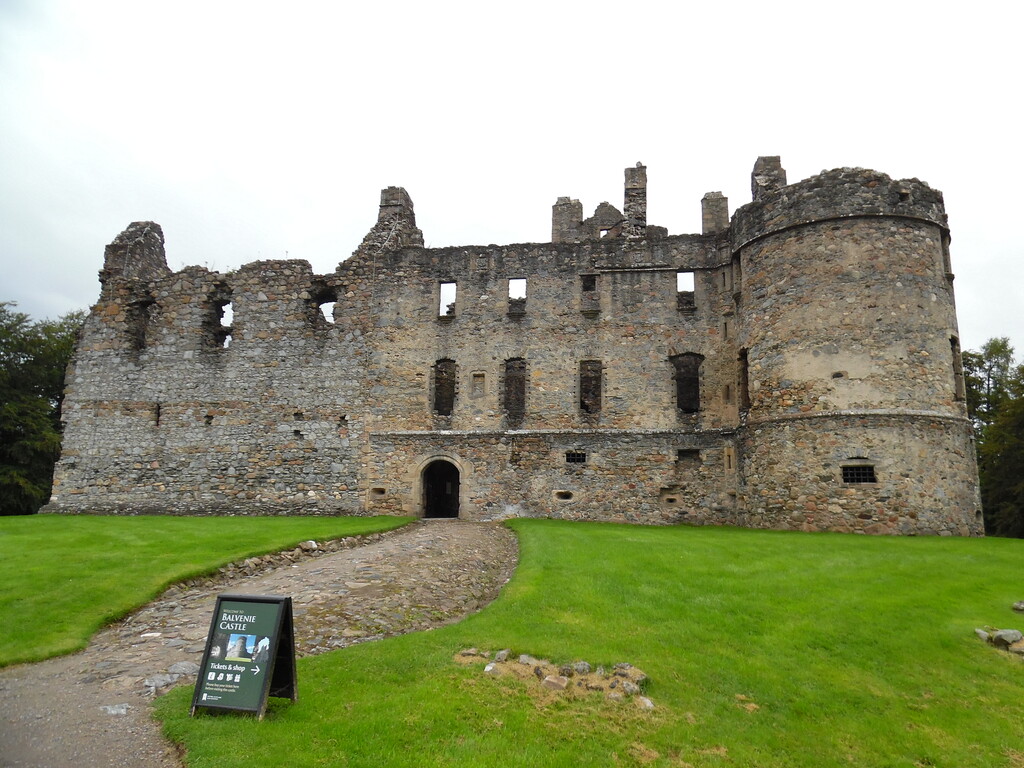
Balvenie Castle
Page last updated 17 June 2026