This page is a detailed description of the line to read before or during your journey. It covers a mix of railway history, local history and information about the scenery you will pass.
Route: Inverness - Nairn - Forres - Elgin - Keith - Huntly - Aberdeen
Trip Length: 2 hours 15 minutes - 2 hours 30 minutes
Inverness is known as the capital of the Highlands. It retains its original, although much modernised, railway station situated next door to the former Highland Railway hotel.
The station has an unusual shape with lines going north, east and south from this terminus.
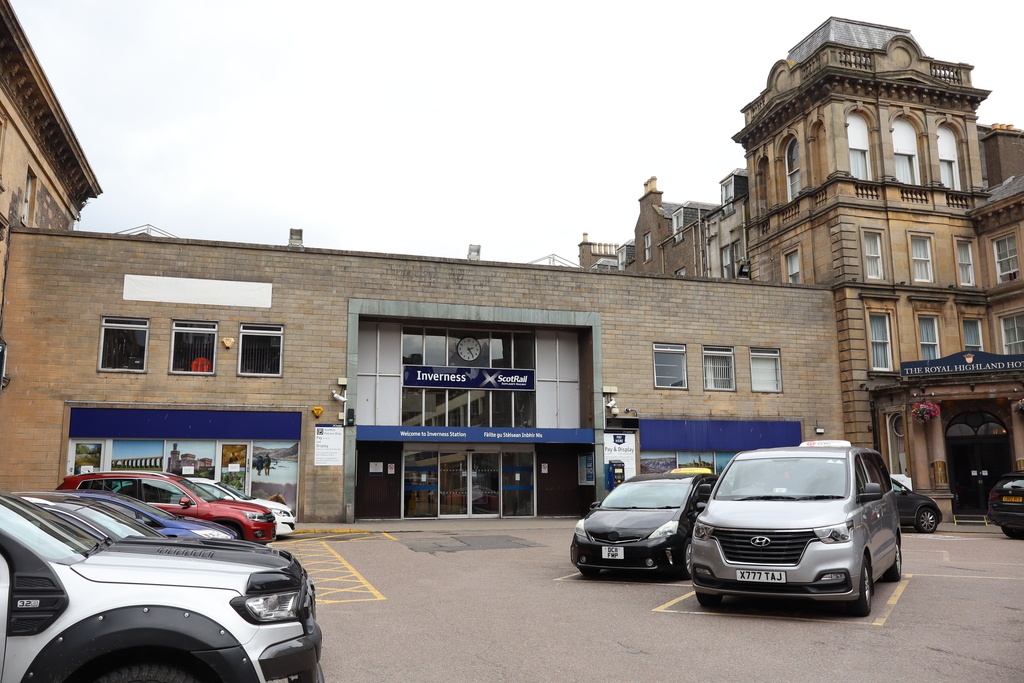
Inverness train station was opened in 1855
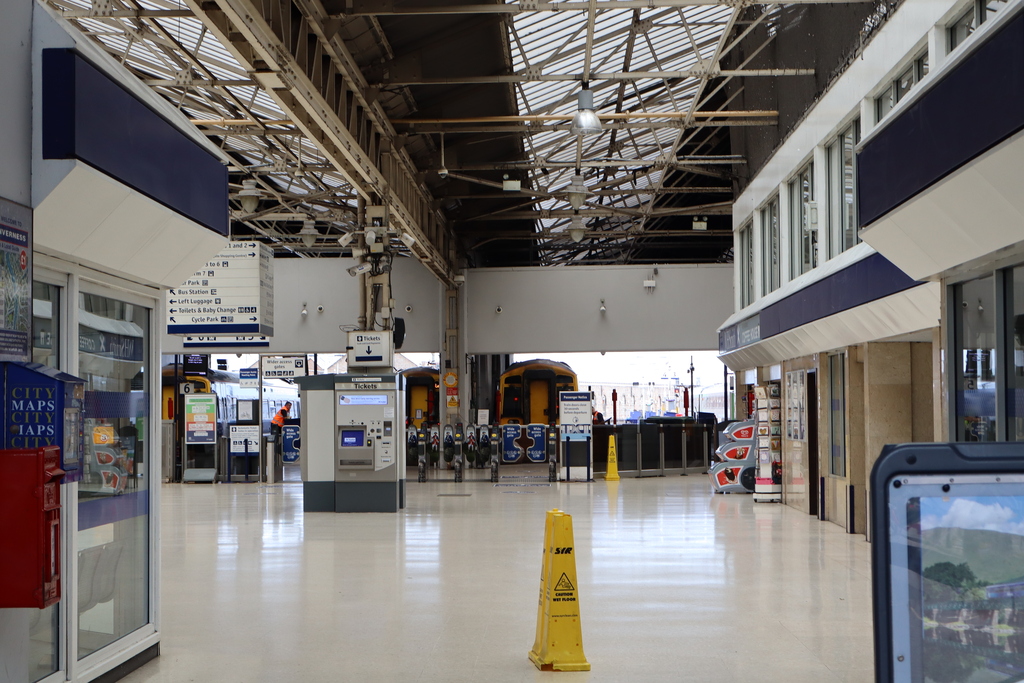
Inverness train station has a waiting room, ticket office, shop and refreshments
Departing Inverness, the large suspension bridge over the Firth is the Kessock Bridge, opened in 1982 by the late Queen Mother. The Moray Firth is in view along with the Black Isle.
Around half way between Inverness and Nairn, the train stops at Inverness Airport train station. This is a newly built station opened in 2023.
As well as providing a link with the airport, it is also near the small coastal village of Ardersier and Fort George, a historic and working military fort.
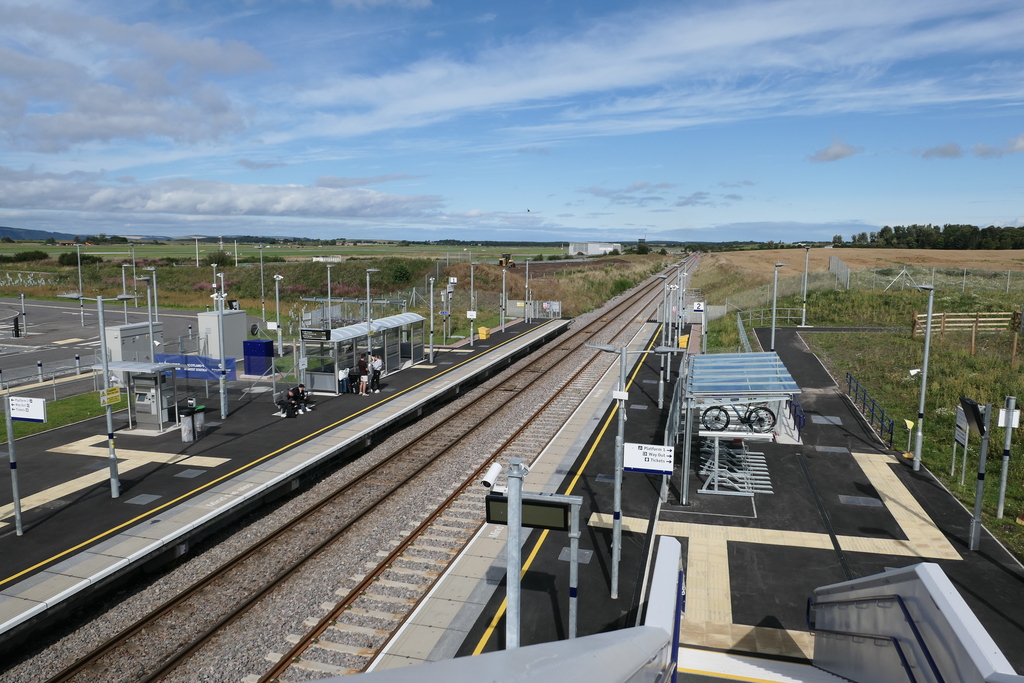
Inverness Airport Station
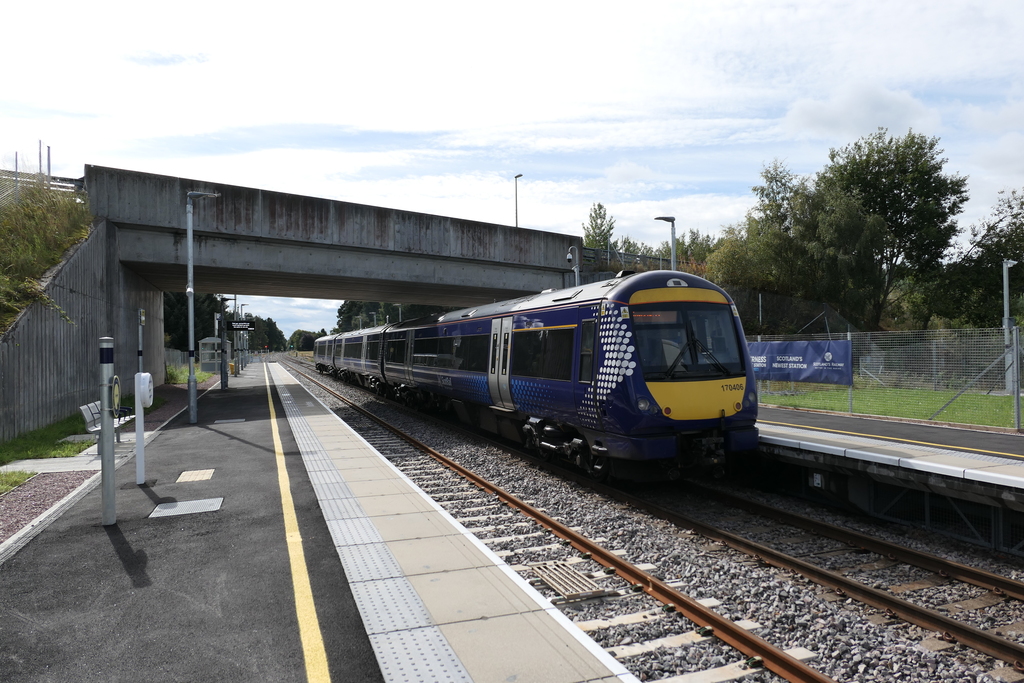
Train at Inverness Airport Station
Departing Inverness Airport the train makes the short sprint to Nairn. Nairn is a coastal town on the Moray Firth with fine views across to the Black Isle peninsula and with a nice beach.
The large attractive stone built station is situated on the town’s main street. It was built in 1855 by the Highland Railway and the original building is still in use with its glazed wood canopy over the platform.
The station used to have two signal boxes with the signal man provided with a bike to get between the two. The boxes still exist although they are no longer in use.
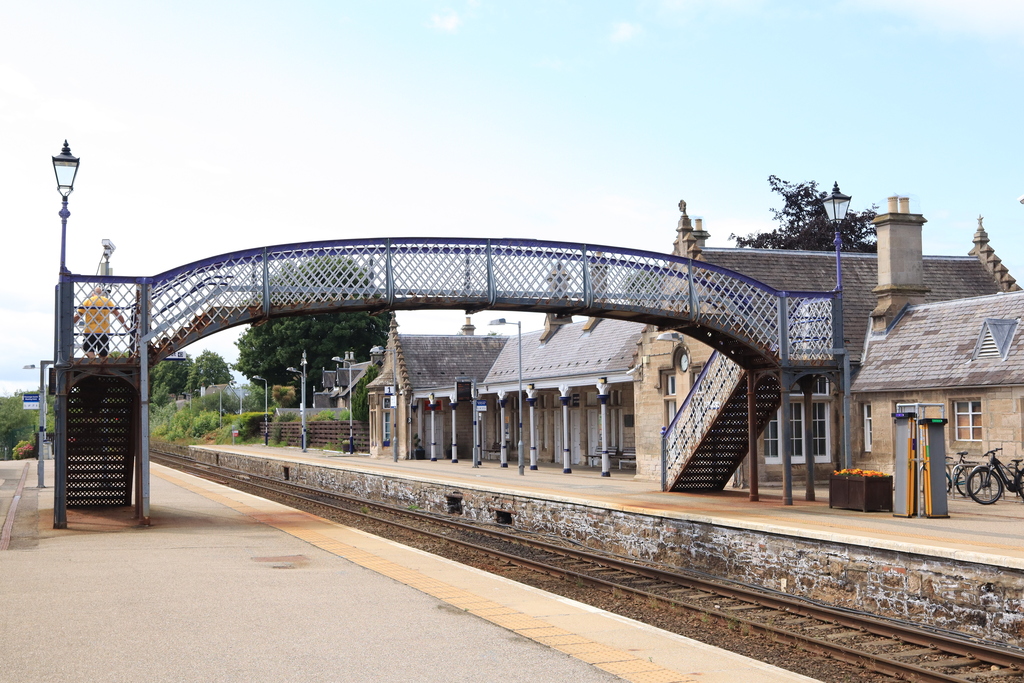
Nairn Station looking to main Station Building and Platform 1
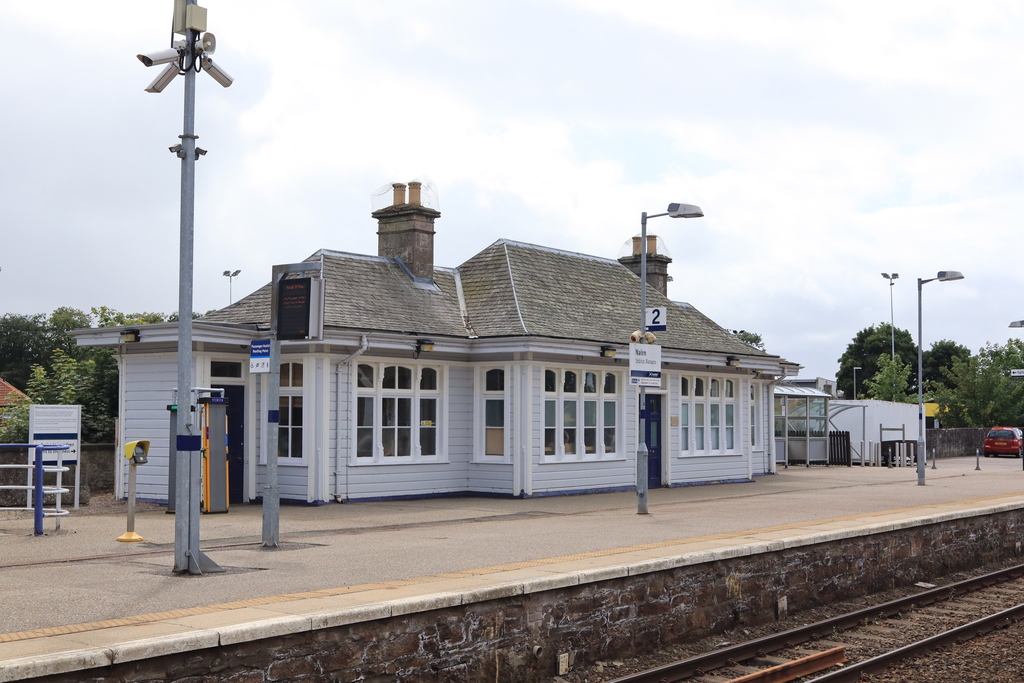
Nairn Station Platform 2
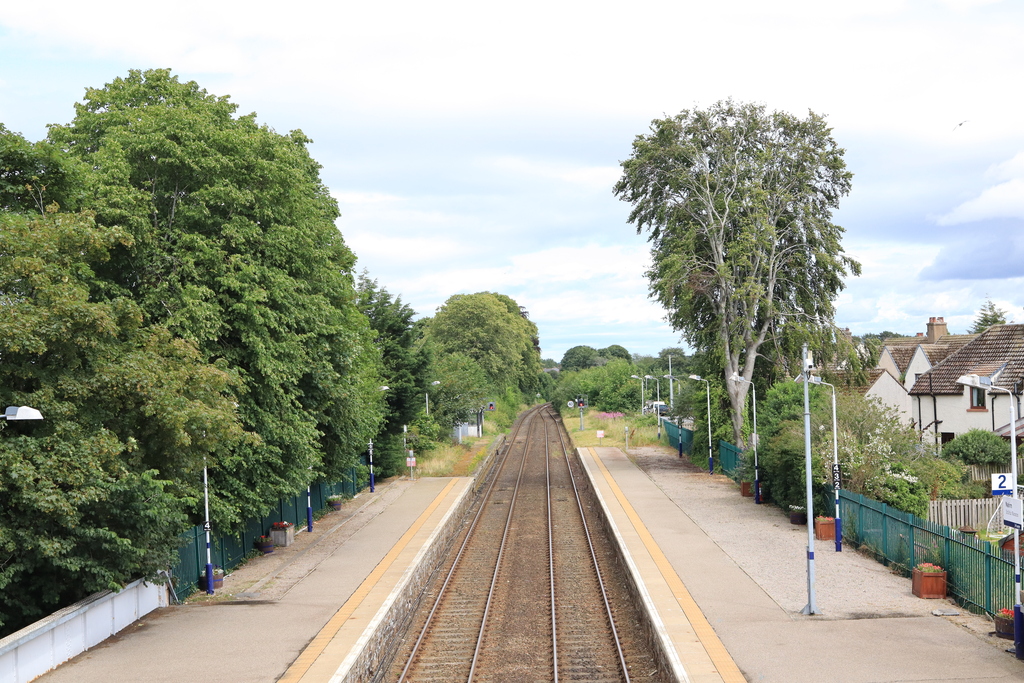
Railway line looking east from Nairn Station
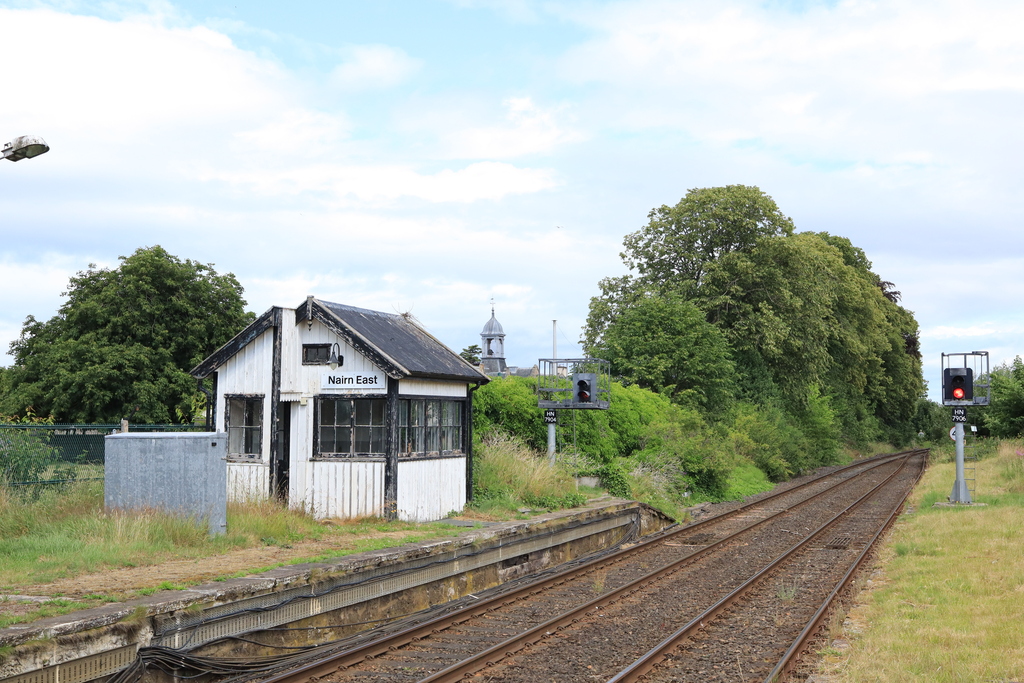
East Signal Box, Nairn
On departure from Nairn the train skirts close to the Moray Firth with views across to Ross Shire and the Black Isle, before crossing the River Findhorn on approach to Forres. Between Nairn and Forres the train also leaves behind the Highlands and begins its journey into the county of Moray.
Forres is an ancient burgh situated in the north of Scotland on the Moray coast, approximately 30 miles east of Inverness. Forres’ new railway station was opened in 2017, upon demolition of the old station nearby.
The journey now continues eastward. Just after leaving Forres station look out for the tall chimney of the Benromach Distillery on the left. Opened in 1898, it fell into disrepair but was saved and reopened in 1998.
Shortly before Elgin is the former Royal Air Force base at Kinloss. In front of the base is the ruin of what appears to be an old church. This is Kinloss Abbey. Founded in 1150 by King David I the Abbey is now a ruin although a conservation trust has been established to preserve the remains.
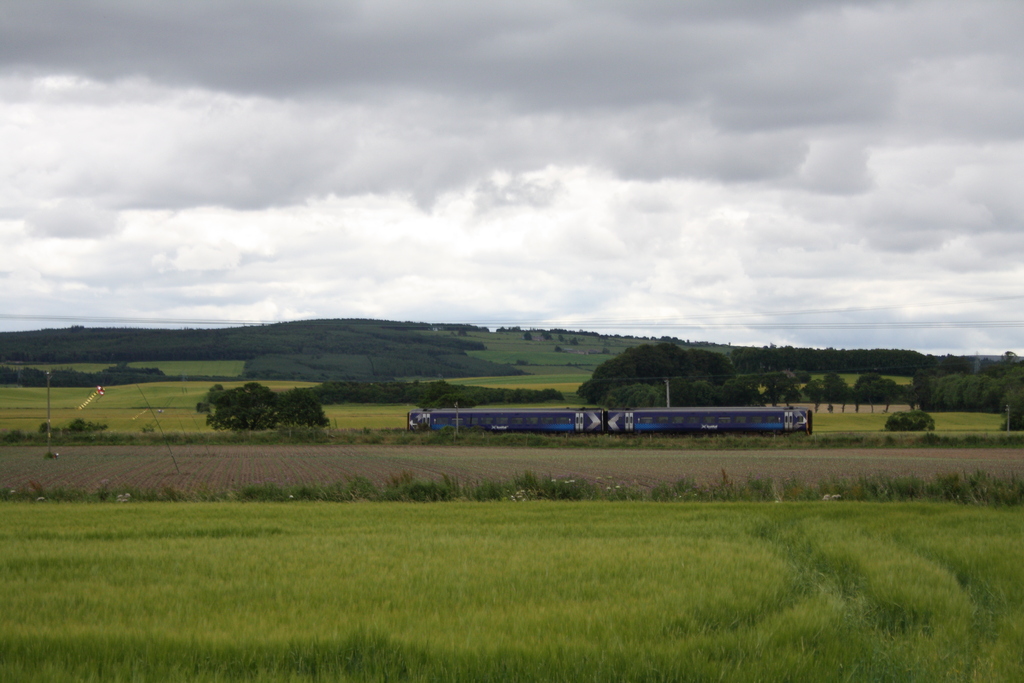
Inverness to Aberdeen Line at Kinloss
Elgin is a former cathedral city and Royal Burgh in Morayshire. Today it is still the administrative and commercial centre for the area.
The town originated to the south of the River Lossie on the higher ground above the flood plain. Elgin is first documented in the Chatulary of Moray in 1190.
It was created a Royal Burgh in the 12th century by King David I and by that time had a castle on top of the present day Lady Hill to the west of the town.
The modern station at Elgin has two platforms. The old Great North of Scotland Railway station with its attractive architecture is still in existence, next door. It is now used as offices and you will view the rear of the station from the train.
Elgin’s rail facilities were rationalised after the closure of many lines in the Moray area in the 1960s. The town was once the heart of an intensive local rail network of branch lines which are sadly no longer in existence.
After Elgin the train heads south, making its way through hills and woodlands on its way to the next stop at Keith. Roughly half way between the two towns the train crosses an attractive bridge over the River Spey and curves around the valley. This is a particularly scenic location for photographs.
The Spey is Scotland’s second longest river and its fastest flowing. The Speyside Way long distance walk also crosses the railway at this point on its way to the sea.
There is a small but well appointed station at Keith. There are hopes for the Keith & Dufftown Railway to use a platform at this station in the future.
Keith is a market town serving the local agricultural industry – the annual agricultural show is held every August. It boasts one of the oldest bridges in Scotland, this being the ‘Auld Brig’, a packhorse bridge built in 1609, and now close to the Town Station. Scotland's only post-Reformation saint, John Ogilvie, was born here in 1579.
Departing Keith the train follows the River Isla all the way to where it flows into the River Deveron. Here the train crosses the Deveron where it travels alongside the river and through a narrow valley for a few miles until arrival in Huntly.
The Deveron rises in the high hills above the Cabrach and slows as it meanders through the lower Aberdeenshire countryside before ending its journey at Banff, on the coast, after sixty miles. It is popular with salmon fishers as it is less well known than the neighbouring Rivers Dee and Spey.
Between Keith and Huntly the train leaves behind the county of Moray and gets its first taste of Aberdeenshire countryside, which is for the most part a mix of pastoral and arable farmlands.
Huntly is a small town on the edge of the Speyside whisky trail. On the east side of the town is the River Bogie, flowing through Strath Bogie. Surrounding Huntly is farmland typical of north east Scotland. These rolling hills are in contrast to the heather filled Highlands south of Inverness.
Huntly railway station was a traditional wooden Great North of Scotland Station with wooden platform canopy opened in 1854. Unfortunately the station buildings were demolished in 1999 and replaced by a modern station building.
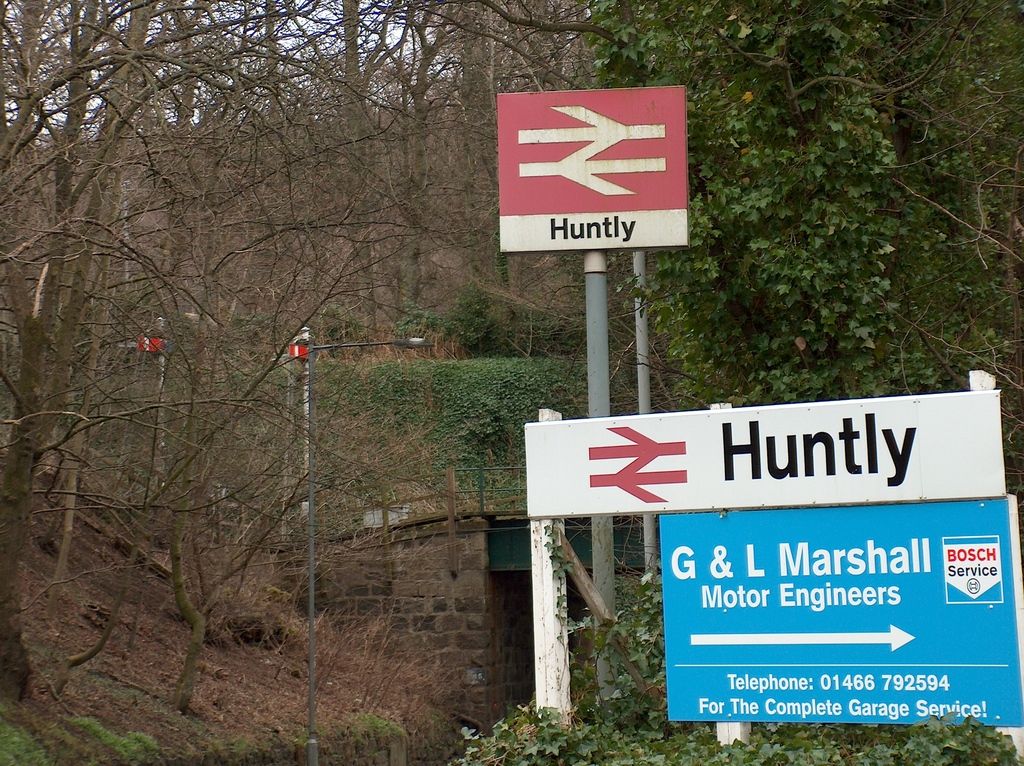
Inverness to Aberdeen Line at Huntly
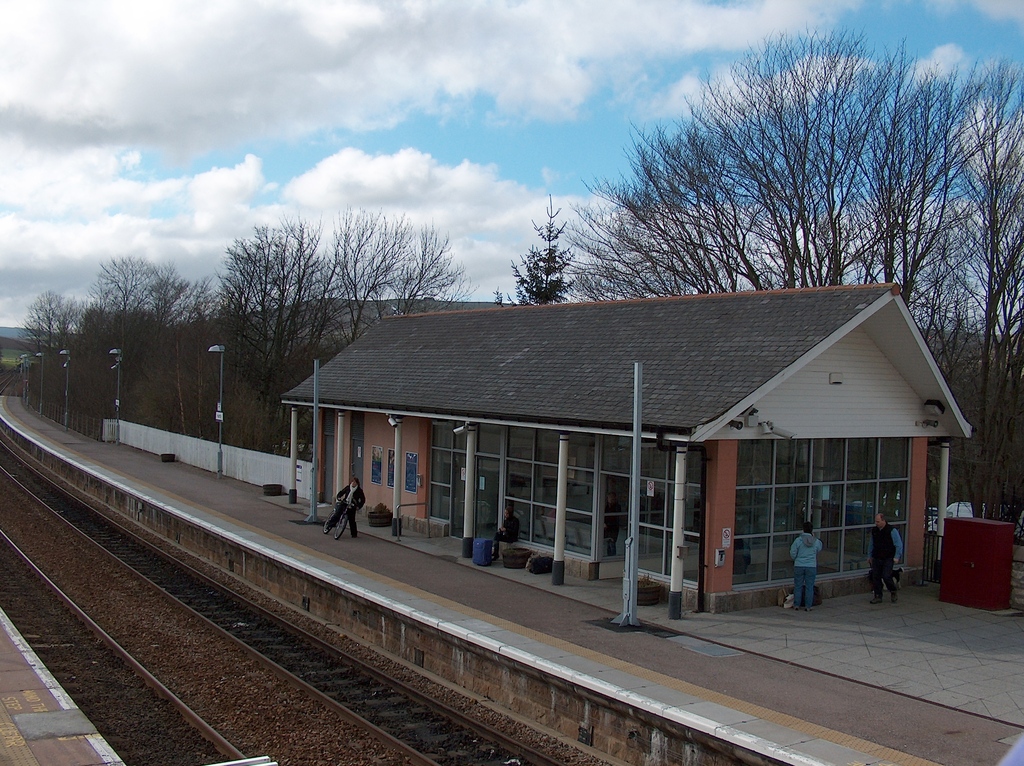
Huntly Station
From Huntly the train continues through the wooded countryside and alongside the River Bogie until Insch is reached. Look out for the small community of Kennethmont. On the left there is an old railway station, a signal box (still in use) and a distillery with the traditional and distinctive kiln roof.
The large white castle type house on the right of the line is Leith Hall, a National Trust property. Set in over 200 acres of grounds and a six acre garden, it is a typical Scottish laird’s residence.
The little white station at Insch was opened in 1854. Although almost all trains still stop here, the station is no longer staffed. However, the building has found new use as the community museum.
Between Insch and Inverurie, the railway passes the remains of the abandoned railway to Turriff and travels alongside the River Urie.
In Iverurie, the original Great North of Scotland Railway (GNSR) station is still in use, together with signal box. The station is perhaps the closest thing to the traditional station on any part of the British rail network, even retaining its goods yard.
The attractive stone built station is fitting for this small town. Look out for the Alexander Gill station clock and small, wall-mounted decorative cast-iron water fountain situated in bays beneath canopy.
The interior of the station is equally pleasant with decorative plasterwork, coomb ceiling of ticket hall and broad segmental arches with part-glazed timber screen walls.
The former Earl of Kintore’s waiting room is entered through a two leaf part glazed timber door and has a parquet floor, timber fireplace and decorative plasterwork.
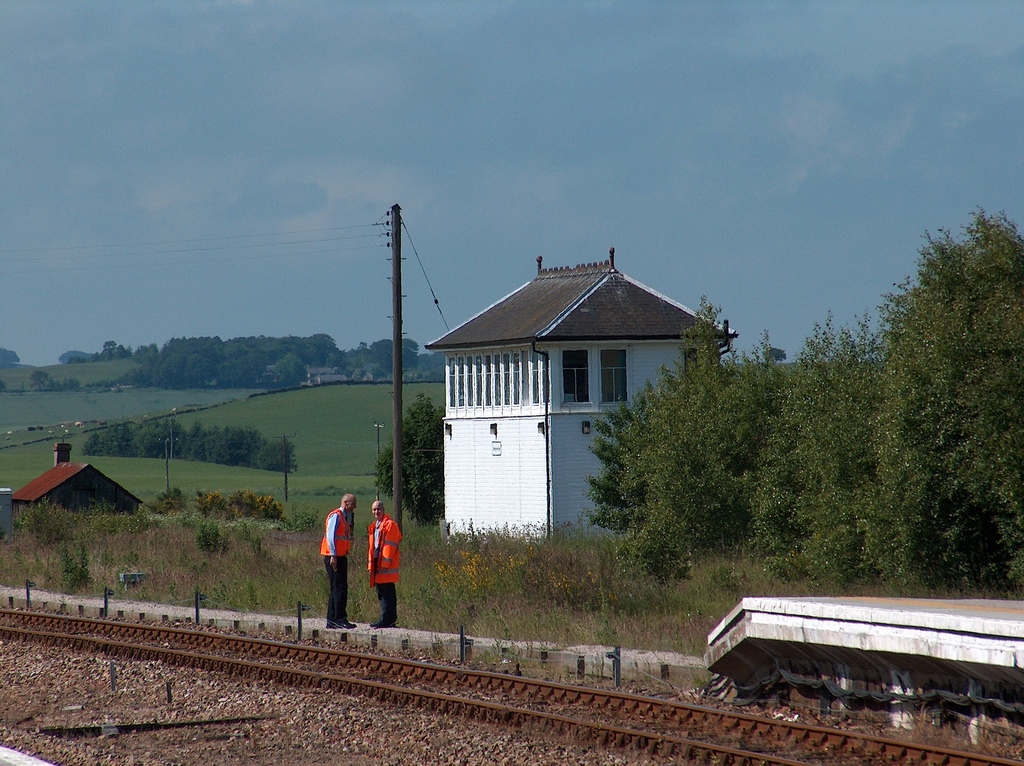
Signal Box at Inverurie
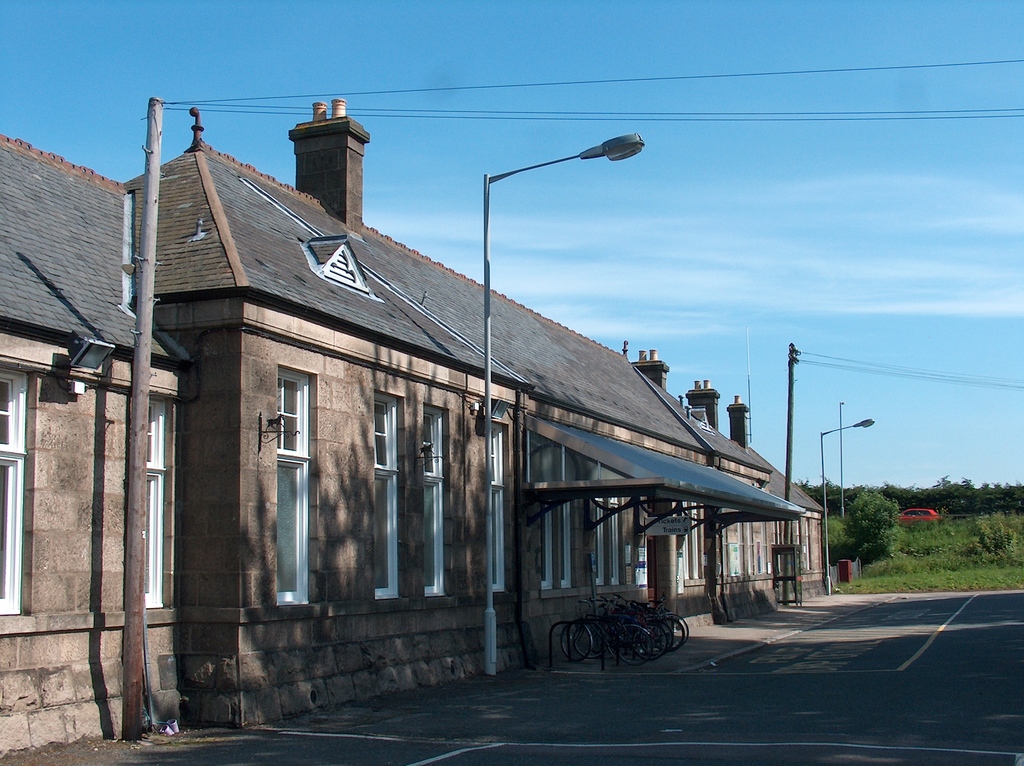
Inverurie Station Building
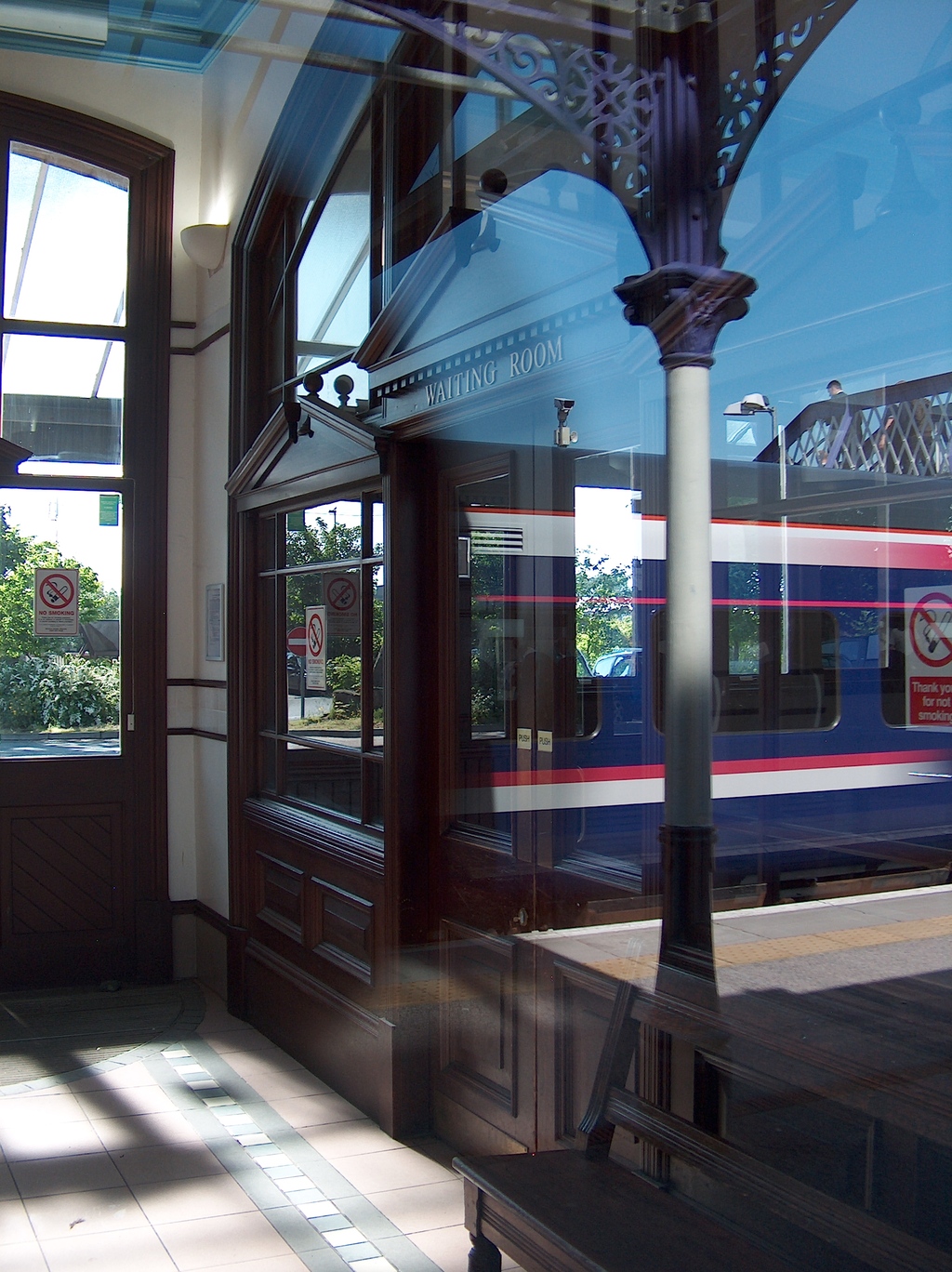
Inside Inverurie Station Building
Leaving Inverurie the train travels alongside the River Don and along the valley floor. The River rises in the Grampian Mountains and makes its way through Strathdon and down to the sea at Aberdeen.
The train stops at Kintore station. The current station was opened in 2020, on a different site from the original station which was closed in 1964. From here the train continues alongside the River Don to reach Dyce.
Dyce is an Aberdeen suburb and the location of Aberdeen Airport. The station is 2 miles from the airport. There is a regular bus service between the two which takes about 15 minutes - see Stagecoach service 737.
Dyce is an unstaffed station although there is an attractive former Great North of Scotland Railway signal box on the platform for those interested in railway architecture.
On leaving Dyce the train travels through the suburbs of the city and shortly arrives at Aberdeen's Guild Street station. It is located just off the main Union Street at the heart of the city, right beside the bus station and close to the ferry terminal.
The station is an attractive original stone building dating from the railway’s opening with large central glass roof housing a huge waiting area for passengers.
Unfortunately the best features of the building are now hidden inside a shopping centre with the passenger facilities moved out and into smaller, less adequate spaces. Platforms lead off the central area to the north and south, although the southern platforms see most of the activity now.
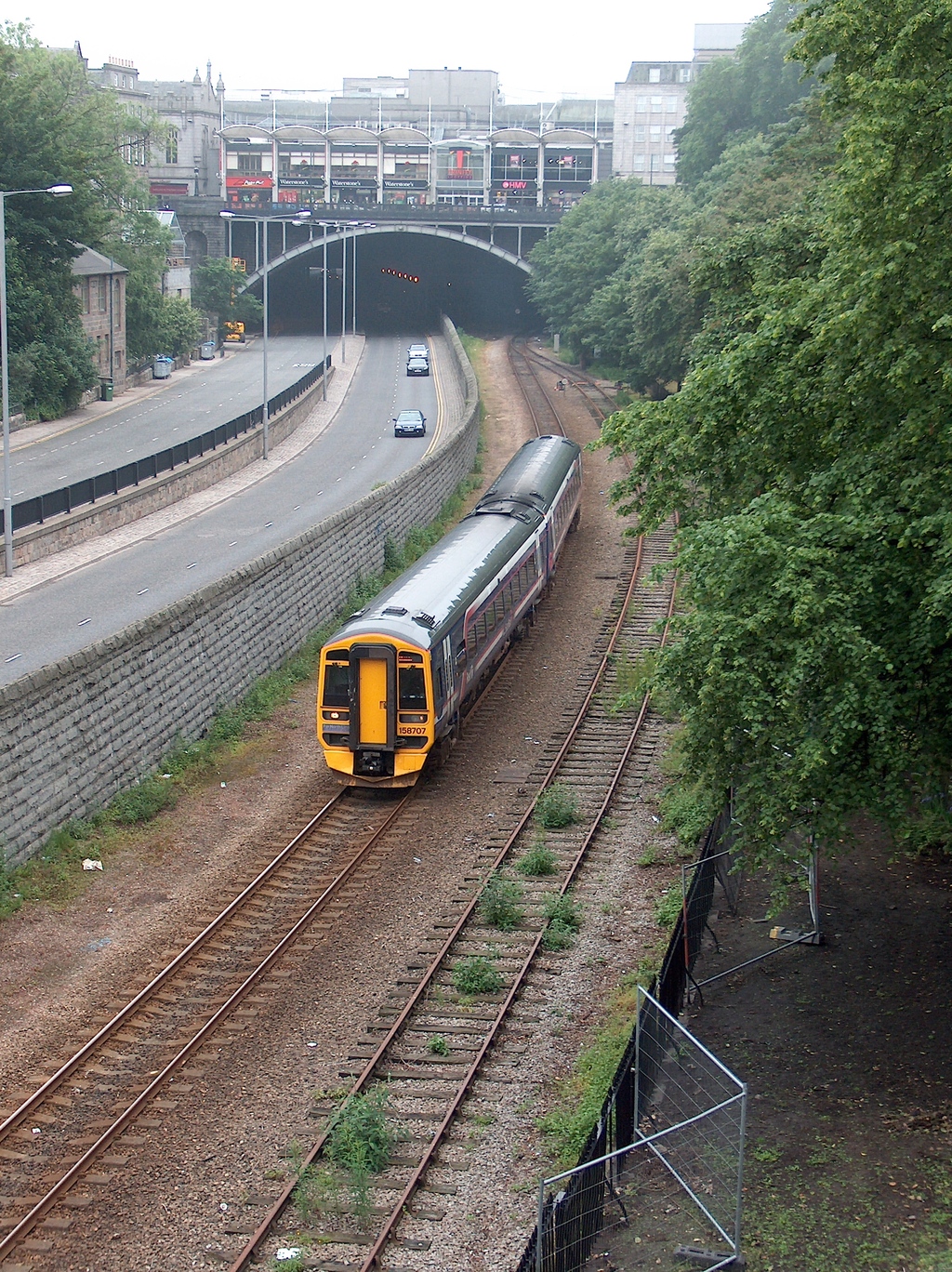
Inverness to Aberdeen Line in Aberdeen
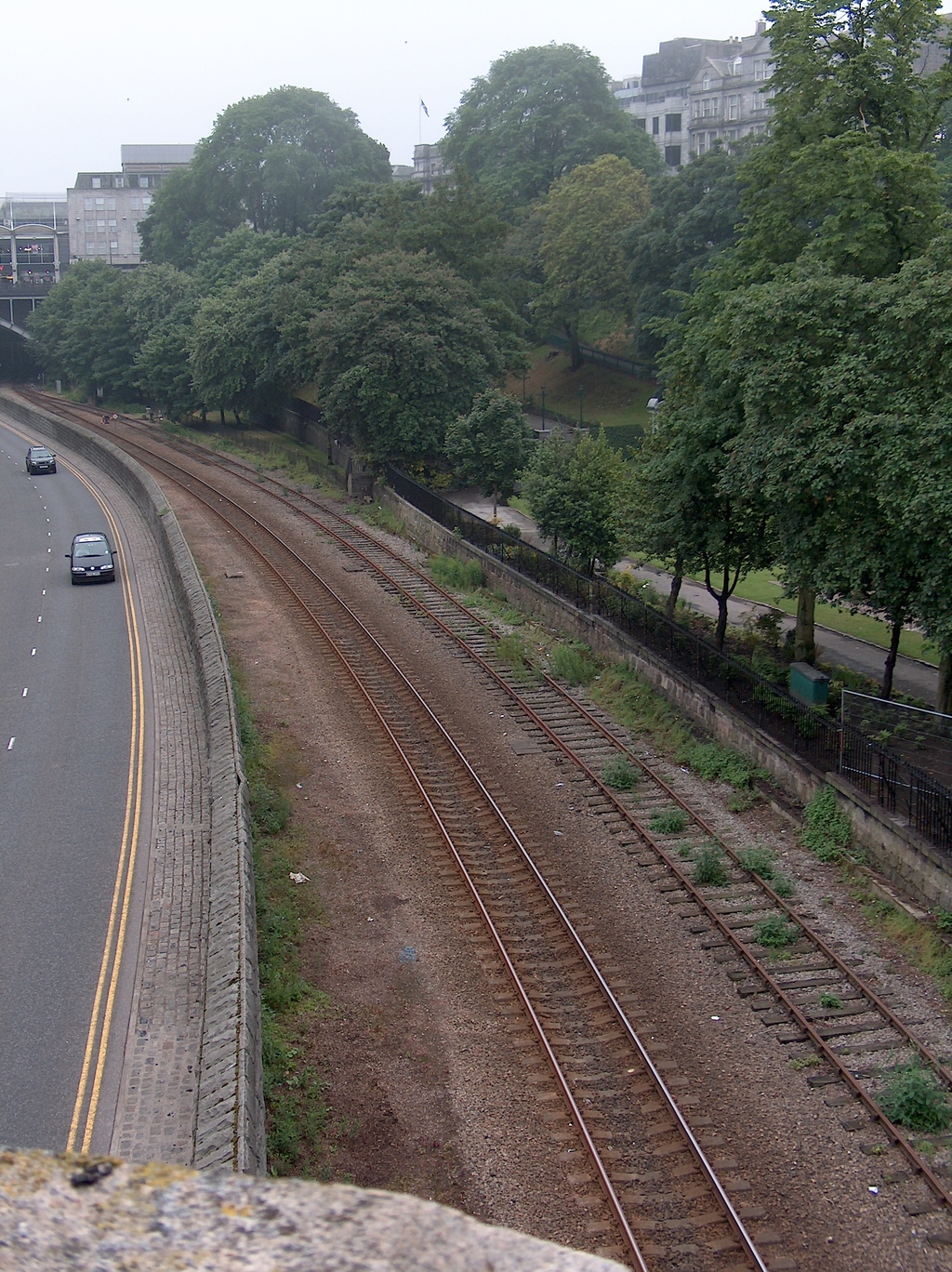
Railway Line
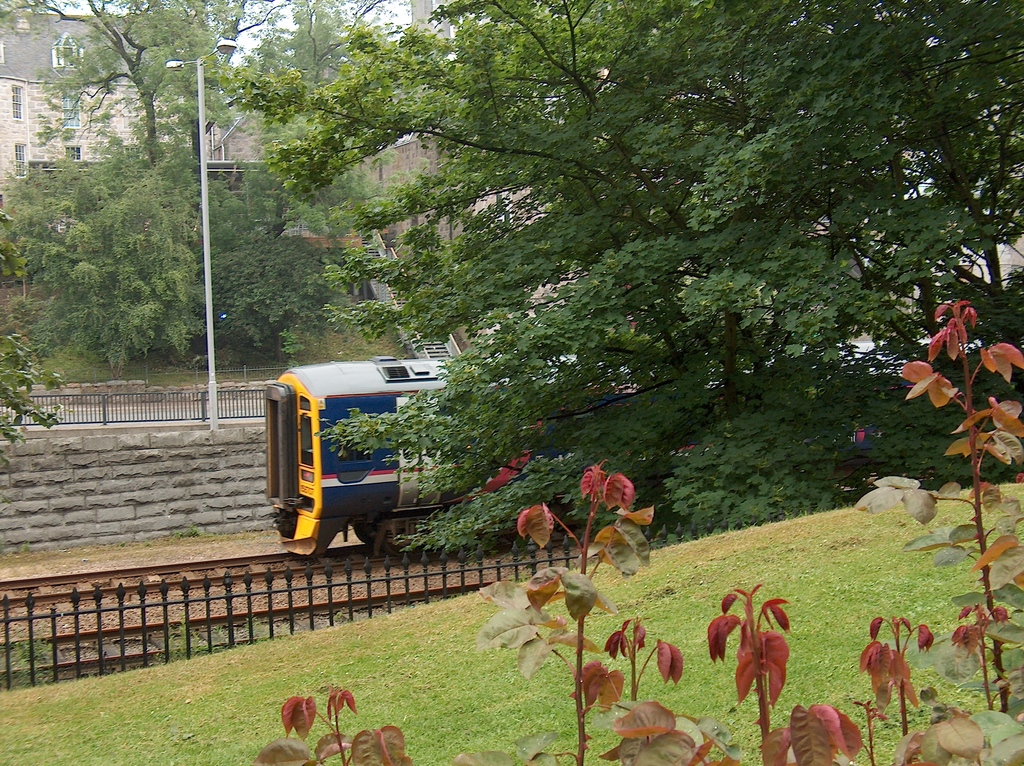
Train on the line
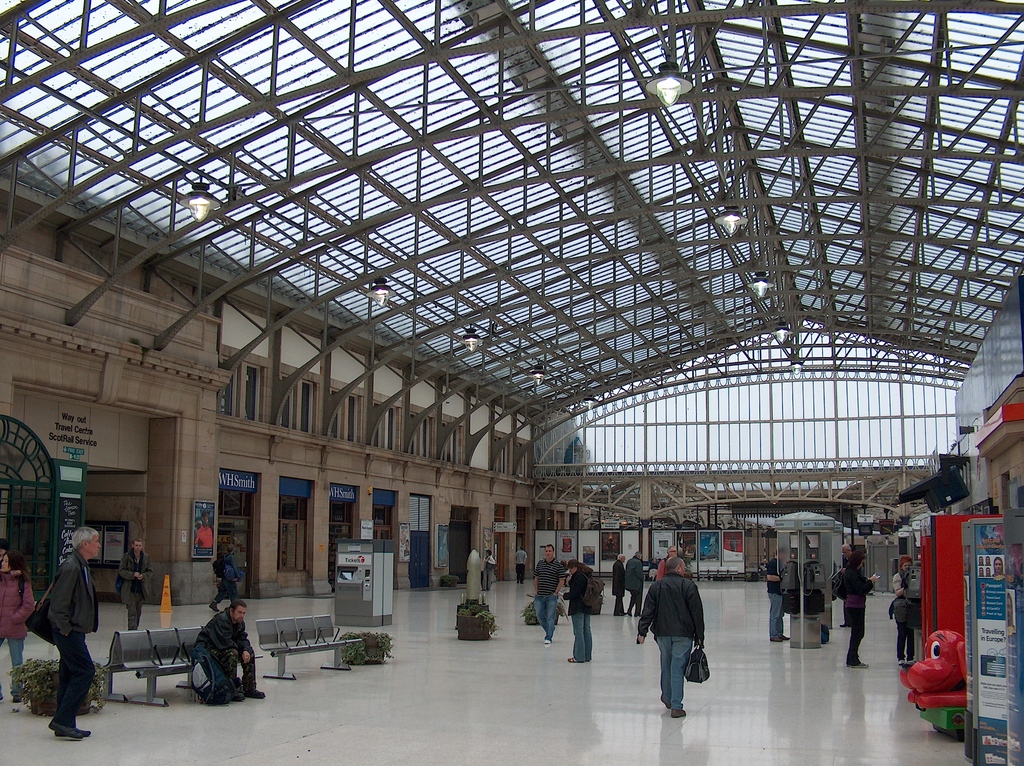
Aberdeen Railway Station
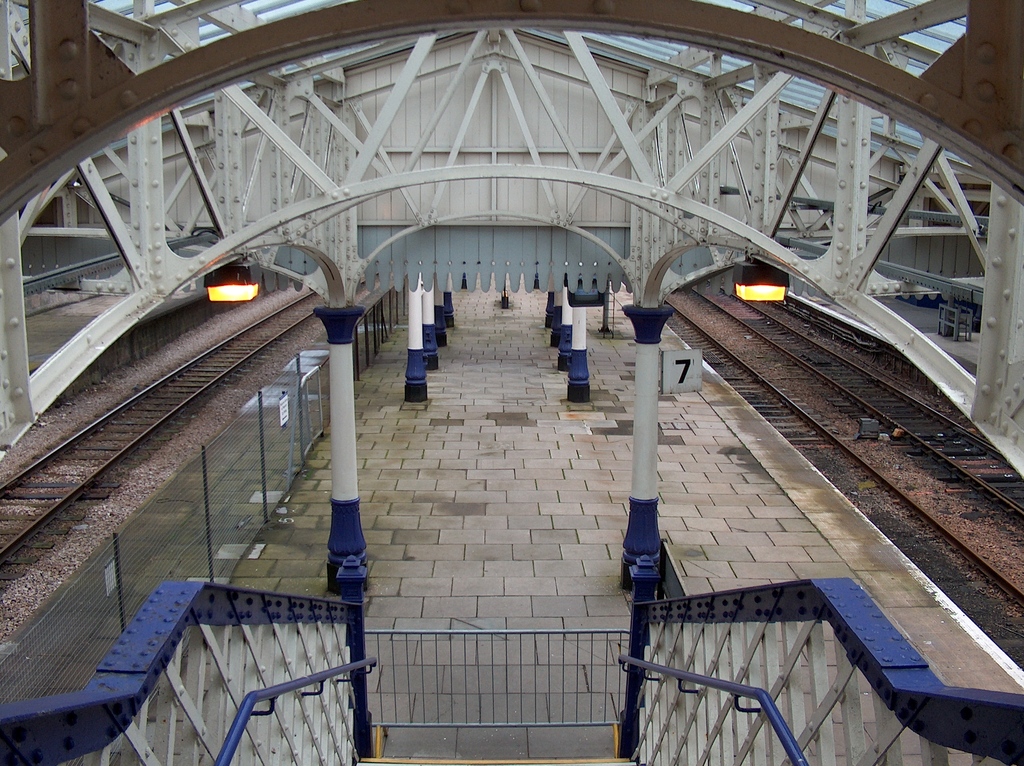
Aberdeen Station Platform
Page last updated 6 July 2026